My Norse Gods

My Norse Gods: Freya


With Children out for a month now, it really is time for something I’ve been postponing for months… apologies to Freya and Freyr.

“My” Freya is the reason why I originally – two years ago? – pitched the book as “Drag Race meets Terry Pratchett in Ásgard.” She  wouldn’t just win Drag Race, because Freya doesn’t compete. She’d send RuPaul to a nursing home and take over the hosting duties – until she got bored (halfway through episode two). She’d then announce that Keeping Up With THE Freya is where it’s at and everyone would switch the channel. In the inevitable Netflix series I cast Scarlett Johansson as Freya because I can’t stand Scarlett Johansson.

This is an unusual interpretation of the Goddess.


The Freya

Our Troth:

As mistress of magic and goddess of sexual love, she kindles the imagination and sparks the heart. Whereas that other great goddess, Frija [Frigg – BL], is wholesome and safe, the Frowe [Freya – BL] is sweet, wild, and dangerous.

[…] Frowe is not motherly in any way. […] To the Norse, Freyja was a goddess of riches, whose tears fell to the earth as gold and whose most common appearance in skaldic poetry is in kennings for “gold”. […]

Here’s Freya getting burnt at the stake – three times:

[Freya] is first thought to have come among the Ases as the witch Gullveigr (“Gold-Intoxication”), whose fate started the war between the Ases and the Wans: “when Gullveigr was studded with spears and burned in Hár’s hall; thrice burned, thrice born, often, not seldom, but yet she lives”

I changed the order of events. The war between the Æsir (the Gods who inhabit Ásgard) and Vanir (those coming from Vanaheim) can’t be won by either of the sides, so they declare a truce and exchange hostages. Freya is one of them, forced to move into an unfamiliar place filled with those who only just stopped trying to kill her and her kin. She is young and afraid, and wants to prove that she is more valuable alive than dead. What she has to offer is love, so when one of the Gods wants to be loved by another, Freya briskly fulfils the wishes. It turns out, though, that some have multiple suitors, others are already taken, and some change their mind five minutes later. In her attempts to avoid the Æsir’s wrath, she enrages them, causing them to fight between each other. Burning her on a stake only once is not enough of a punishment. The myths don’t seem to consider this to be a particularly memorable event in Freya’s life. She seems to just get over it.

Not in my book, though.

My Norse Gods: Freya Read More »

My Norse Gods: Frigg

The Ten Worlds will be less of a series and more of a universe I am building based on the Norse lore and surviving resources, which I then alter to fit my needs. Today I’d like to introduce you to Frigg, the wife of Odin – if I were in charge of casting the inevitable TV adaptation, I’d choose Tilda Swinton.


Frigg is – to quote Our Troth:

the most motherly […] she is the closest thing to an All-Mother the Northern folk know.

Frigg does not get a lot of space in the Norse lore, sometimes even being seen as an aspect of Freya (I disagree with this). Baldr is the only child of hers that is actually named. The long-haired, peace-loving, gleaming Shining One, dies in rather awkward circumstances. After Ragnarök, when the worlds of the Gods come to an end, some of them survive – and so do a man and a woman – led by Baldr, the long-haired, bearded, peace-loving embodiment of goodness, one who returns from the dead, the son of God (and Goddess). Those stories have been written down by Christians after the Viking era was long over. Some scholars believe that Baldr is a kenning for Jesus, added to the Sagas/myths by Christians to symbolise the fall of the Norse Gods and the rise of… well, Jesus. I agree.

I removed Baldr completely from my version of the pantheon. Frigg’s description of ‘the most motherly’ coming with lack of clarity as to whose mother she is exactly made me wonder: what if the answer was ‘nobody’s’? What if the one who craves motherhood the most, becoming its embodiment, the Goddess mothers and pregnant women call upon, were unable to have children of her own?

My Norse Gods: Frigg Read More »

Children of the Gods: Jötunheim, jötnar, and Lay of Thrymr

The Norse lore and cosmology are incredibly complex. While we don’t have a holy book of any sort, heathenry is called “the religion of research” for a reason. There is much more to it than the few myths Neil Gaiman retold in his Norse Mythology, and Snorri’s Poetic Edda and Prose Edda. Those writings, both academic and not quite so, ranging between analysis of each line of Völuspa and summaries of Norse shamanist techniques, need to be read through two filters. The first is that there are no written resources from the actual Viking period – it’s taken centuries before the sagas have been written down by Christians. The second – everyone who took it upon themselves to interpret them had an agenda of their own (disclaimer: so do I, only I’m not pretending that I’ve written an academic book). So I read perhaps 1% of what is available, tried to strip it from modern additions, reminded myself that a lot of the Viking-era resources are items the archeologists labelled “religious artifacts” (which translates to “no clue, really”)… then altered what needed to be altered in order to turn that sliver of knowledge into what is hopefully an entertaining, if dark, novel.

When the first round of beta-readers provided me with feedback, they pointed out that they often got lost among all the Gods and worlds and races. I was surprised to hear that despite Chris Hemsworth’s chest there were still people who didn’t even know who Thor was. I have added an index at the beginning of the book, or rather Loki did, where the Gods and the worlds get brief introductions. Finding the right balance between “I don’t understand a thing” and “here’s 50 pages describing the roofs of Heimdall’s hall” has been difficult and I have no clue whether I’ve managed. Here on the blog I’ve been writing a bit more about the Gods – this time I’m going to try and tackle a whole world…


Jötunheim

Jötunheim – the home of the jötnar, one of the heathen Nine Worlds, is where the book begins. The popular mistranslation of the word “jötunn” (singular for “jötnar”) as “ice giant” is something I blame Marvel for. In my book it’s also something of a racist slur when used by other peoples. The most accurate/literal translation of “jötnar” would be “the Eaters”.

In my book Jötunheim consists of two parts, the East and West. The Easterners, traders and sailors, are the ones the elves and humans tend to know. That part of Jötunheim is also the coldest, covered in snow and ice through most of the year. The mocking phrase “ice giants” was coined when the elves and human failed to understand the jötnar’s refusal to leave their home land for warmer pastures. Surely, they mocked, that meant that the ice giants loved the cold just as much as the dwarves of Svartálfheim adored spending their lives in their underground forges?

Children of the Gods: Jötunheim, jötnar, and Lay of Thrymr Read More »

My Norse Gods: Thor

The most important thing I need to say: Thor is not blonde, doesn’t shave, and does not have six nipples, as the Marvel Comics and movies would make you believe. As nice as Chris Hemsworth is to look at, in the inevitable blockbuster movie based on Children Thor will be played by Kristofer Hivju. (Picture above: the premiere of season 6 of Game of Thrones)

Now that we got that out of the way, let me introduce him to you. Thor is mostly known as the God of thunder and lightning, but he’s also the God of blacksmiths (obviously), and the patron of farmers, someone to call upon to hallow a new dwelling and during a marriage ceremony. He is the son of Odin and Earth herself, and disrespecting Earth, particularly forests, is disrespecting Thor himself. His is the Nature that does what it wants, instead of being rearranged by humans to fit their needs. A heathen who leaves plastic bottles or beer cans in a forest should not expect friendly treatment either from the Gods or me if I see that. One does not want to see what Thor is like when he’s furious, or hear what I have to say if I see someone throw a plastic bottle on the ground.

Speaking of humans, Thor is the God most beloved by them, often referred to as “Father”. As a father figure he is a no-nonsense, non-toxic, strong, emotionally available one. He’s not a dumb simpleton, as he is often presented and misunderstood; he’s got the simple man’s wisdom, free from agenda or politics, generally assuming that the simplest solution is the right one. His by-names include “Deep-Thinker” and “Deep-Souled” – which makes me think of the Icelandic farmers spending their evenings writing poetry. He tends to do what he considers to be fair, rather than what the law states.

My Norse Gods: Thor Read More »

My Norse Gods: Odin

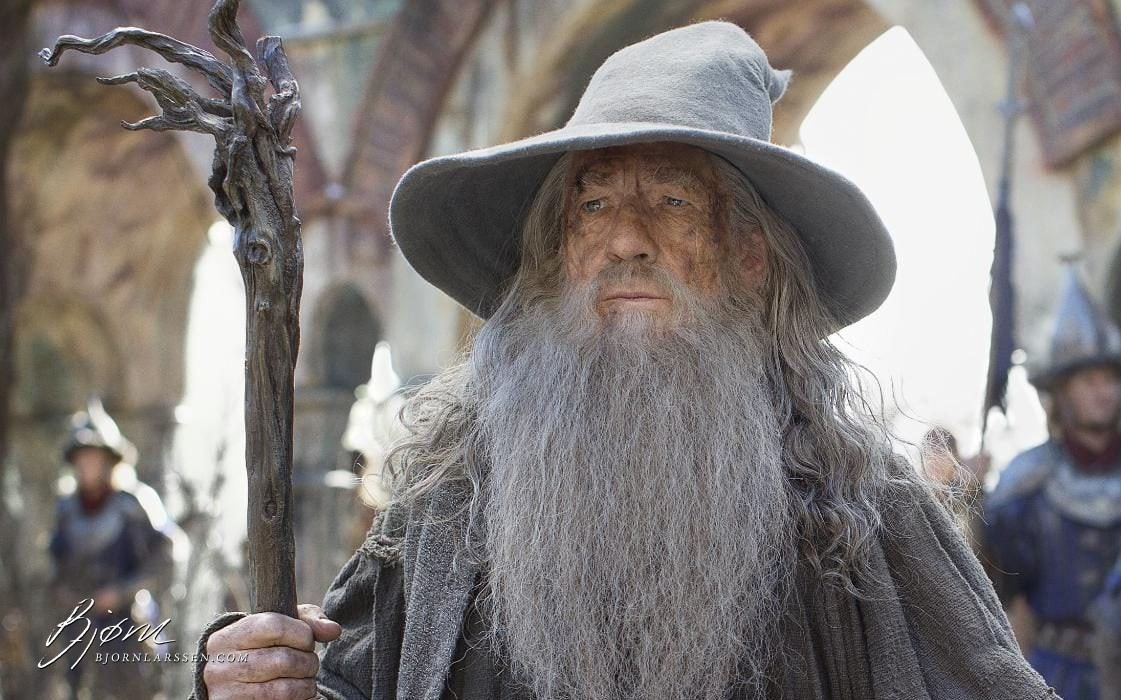
If I were in charge of casting a movie based on Children, Odin would be played by Sir Ian McKellen just because Sir McKellen did an incredible job playing Gandalf and Tolkien barely bothered to change anything when he decided to simply rename Odin to something else for his little Lord of the Rings books.


Who is Odin?

Odin is the most complex of all the Gods and Goddesses in the Norse pantheon. Not for nothing does he have more than a hundred kennings (by-names), among which you will find ‘The Mad One’, ‘The Furious One’, ‘The Inspired One’, ‘The Desired One’, ‘The Terrible One’, and ‘The Old Bastard’. He is a poet, a healer, a magician, a warrior. When calling upon Odin it is advised to use the name referring to the Odin you would prefer to experience. Prefer, because if he feels otherwise you might be in for a surprise of your life. Possibly your last.

The Marvel movies put the All-Father in the position of the “chief God” to make it easier for people without experience in polytheistic religions – the Father, the Son, and the holy… uh, Loki. The truth is more complicated. In the Norse times, the God considered to be the “leader” differed depending on the region. In Iceland, for example, the favoured Gods were Thor and Freyr, with Odin rarely present in the Sagas (although by no means unknown). Since each of the Gods was associated with certain personality traits, Iceland focussed on the Gods unrelated to wars. In other parts of the world Odin or Týr were the “chieftains”.

My Norse Gods: Odin Read More »

My Norse Gods: Loki

I am currently working on a series called The Ten Worlds, which is based on the Norse cosmology and mythology. The first two books will be a duology Children and Land. In the “My Norse Gods” series I am going to introduce the Gods the way they are described in The Ten Worlds which might or might not be in agreement with either the academic resources or what other heathens might believe.

If I were in charge of casting the upcoming Netflix series based on my books, Loki would be played by Jared Leto.

Loki

The Marvel universe, which I will unfortunately have to mention quite often, created the Father (Odin), Son (Thor), and the Devil (Loki) to explain the Norse Gods to those who either follow, or at least have basic understanding of Christianity. None of those three job descriptions are correct, with the exception of Thor being Odin’s son. The dichotomy of the Good All-Father God vs Evil Trickster Devil is false, if only because the Norse faith doesn’t contain universal concepts of “good” and “evil”. (As an aside, we don’t have a concept of “sin” either.) When the Vikings fought the Christians, the Christians told themselves they were the side of the good. Vikings were the side that wanted to win. Odin is not the “God”, more about which later, and Loki is not “Devil”. Loki is chaos, curiosity, and fun – as he defines it. He takes things away, gets caught, brings back something better – if you can force him or convince him otherwise.

It is so difficult to explain Loki that entire books have been devoted to him – such as The Problem of Loki by Jan de Vries, which gave me a headache. Some Ásatrúar (the organised heathen religions) refuse to have anything to do with Loki, even forbidding any form of worship of Loki during their gatherings. Yet Loki is also Thor’s best friend and it is thanks to Loki that Thor received his hammer Mjölnir. Would you really dare to tell Thor “you’re welcome here, but only if your buddy stays away”. Is it better to celebrate the bringer of chaos, potentially attracting his attention, or to push him away, potentially attracting his attention?

My Norse Gods: Loki Read More »

Scroll to Top